
Tag: data-driven design
-
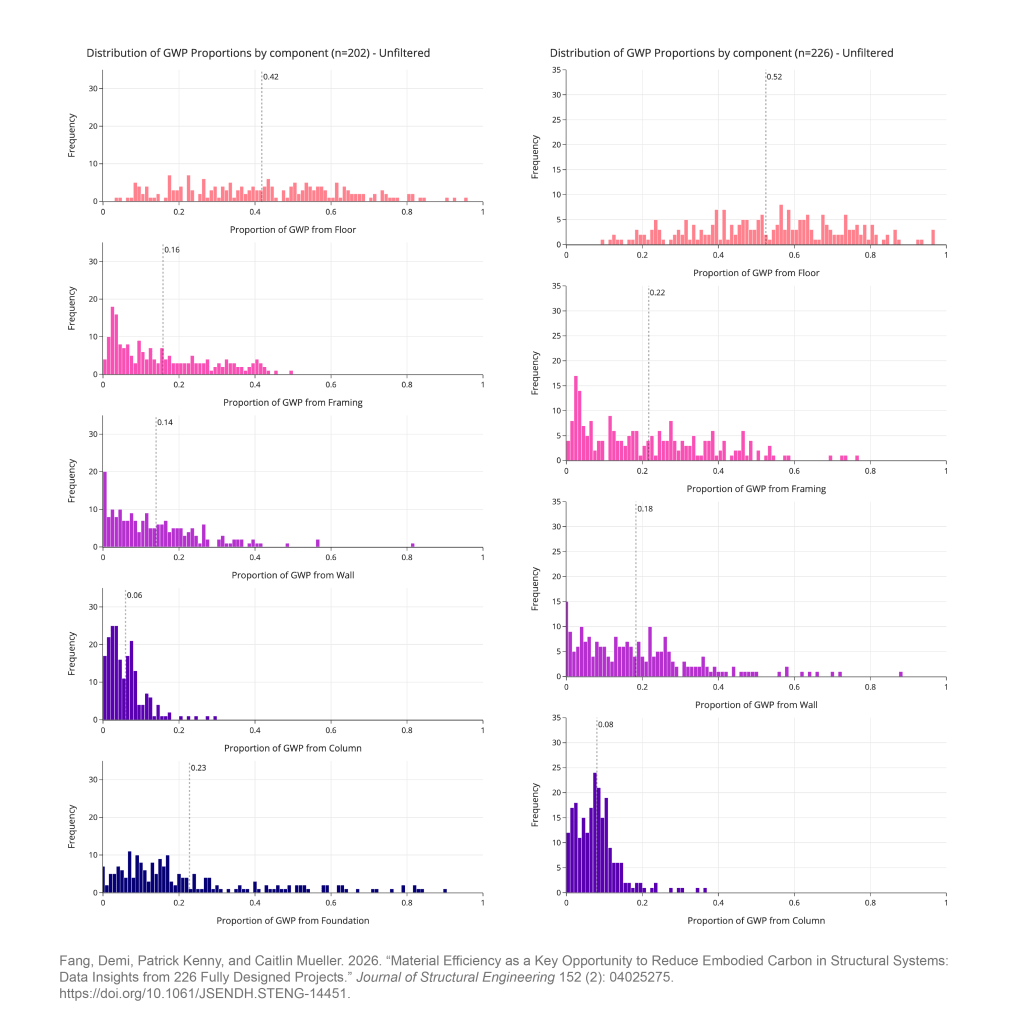
Material efficiency as a key opportunity to reduce embodied carbon in structural systems: Data insights from 226 fully designed projects
Data on embodied carbon in our sector offer unique opportunities to answer key questions about (1) the relative contributions of structural components to emissions, (2) the relationship between material system choice and resulting quantities, and (3) the relationship between material quantities and embodied carbon. Although such analyses have been performed for synthetic data, these types of findings are…
-
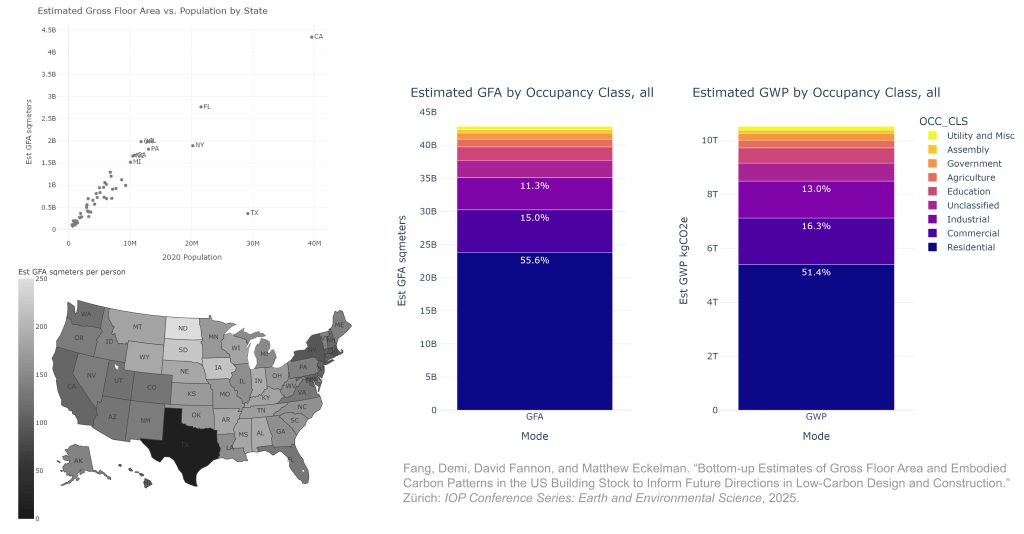
Bottom-up estimates of floor area and embodied carbon patterns in the US building stock
What is the distribution of Gross Floor Area (GFA) and embodied carbon among building types and building sizes in the United States? By count and floor area, the US building stock is dominated by residential buildings, especially small ones. The data are strongly right-skewed: the top 6% of buildings by floor area make up 50%…
-
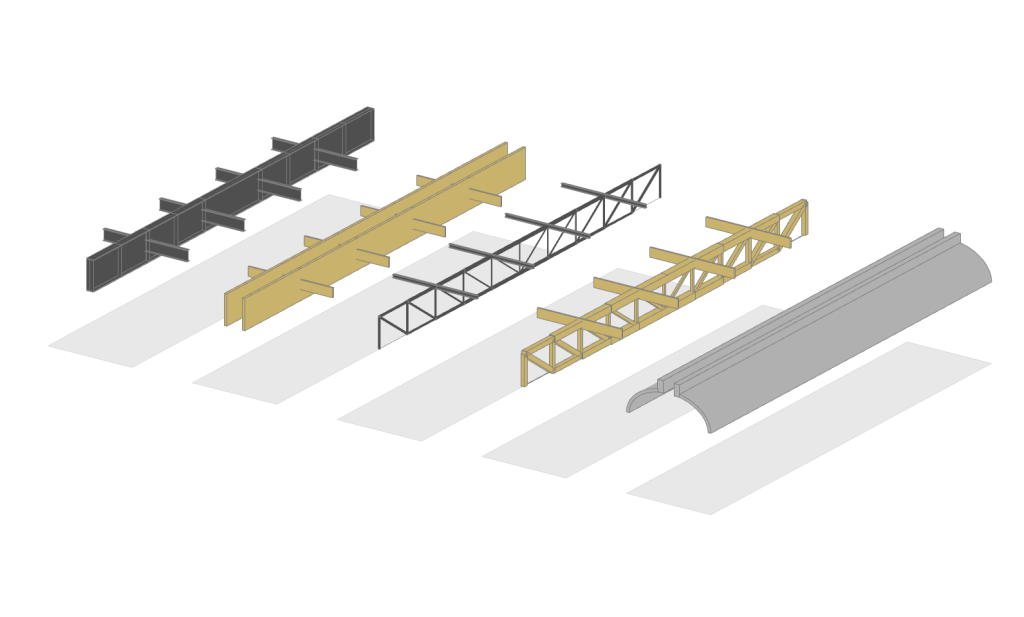
Trans-typology design space exploration: Using gradients to inform decision-making in the design of spanning structures
Does a timber beam or a steel truss result in a lighter structure? Between shortening the span and decreasing the load demand, which results in a more efficient structure? Structural designers pursuing high-performance design must typically make decisions based on perceived tradeoffs. As an alternative to the extreme paradigms of deploying rules of thumb and…
-
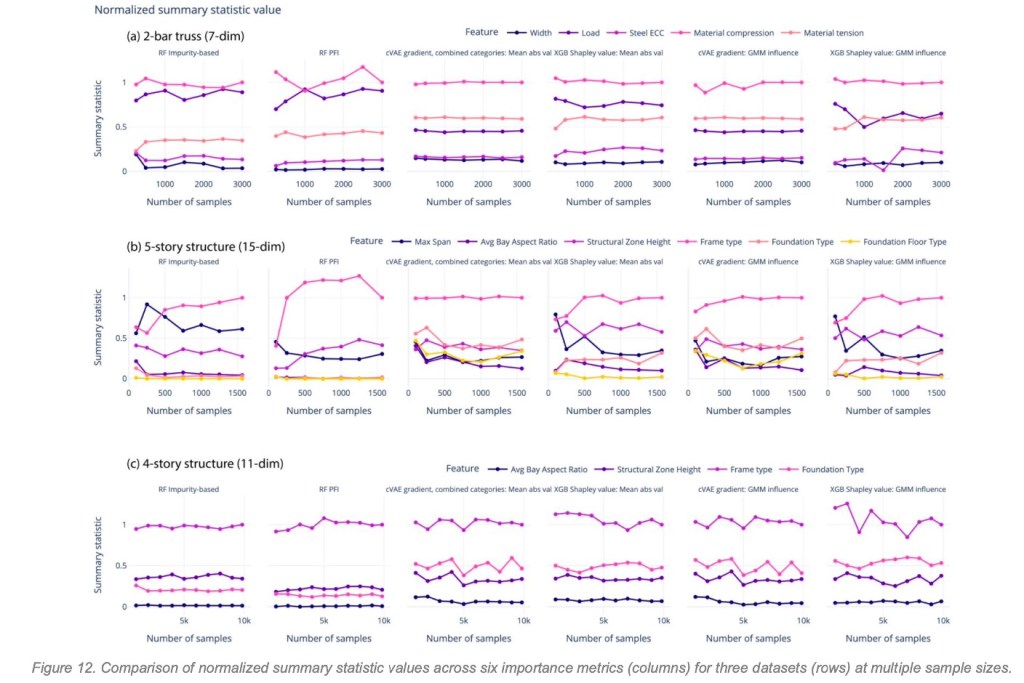
Informing decision-making in single-objective, mixed-variable design problems
Data-driven decision-making in mixed-variable design problems presents a variety of challenges and opportunities, especially in the increasingly data-rich field of emissions in architectural and structural design. Designers can benefit from an underlying knowledge about, for example, whether material choice (discrete) or span (continuous) have more important consequences on structural emissions. This intuition need not be built…
-
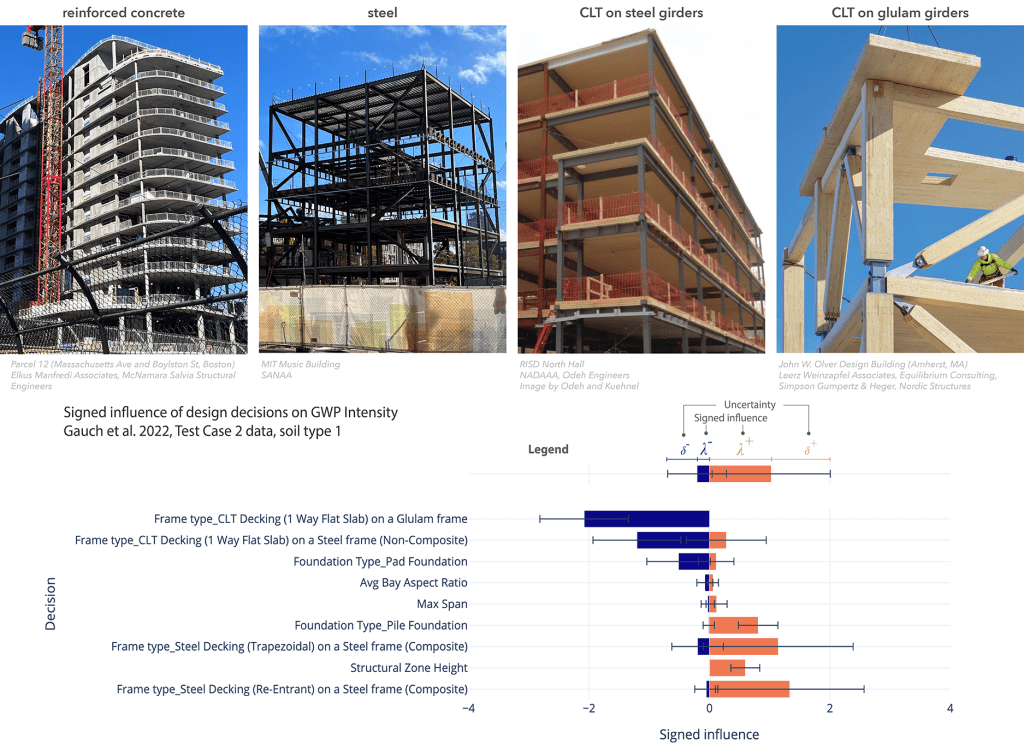
System-level design of low-carbon structures
“What is more likely to be associated with a reduction in emissions: switching from concrete to timber, or shortening the spans throughout the building?” While such insights are valuable for mitigating emissions from structural systems during early stages of design, it is difficult to answer these types of questions in current paradigms of performance-driven design.…
 Structural Futures Lab