
carpentry craft circularity data-driven design engineering practice low-carbon structural design
Our research interests lie at the intersections of data-driven design, the human experience of structural design, and environmental impacts of structural systems.
Structural design and engineering, design space exploration, and data-driven design represent natural pillars of our research.
We are also interested in drawing from other disciplines for our research objective of improving the environmental impacts of the built environment. These disciplines and methods include data analysis, machine learning and interpretability, data visualization, human-computer interaction, urban-scale analysis (e.g. building stock analysis), and social sciences research (e.g. surveys and interviews).
We have previously partnered with academics at ETH Zürich, at EPFL, at MIT, and at Pennsylvania State University. With our eye on impact, we also value our collaborations with practitioners in industry, including the SE 2050 Commitment Program and structural engineering firms such as Thornton Tomasetti, HNTB, SOM, and Arup.
Papers
These are most up-to-date on Google Scholar.
-
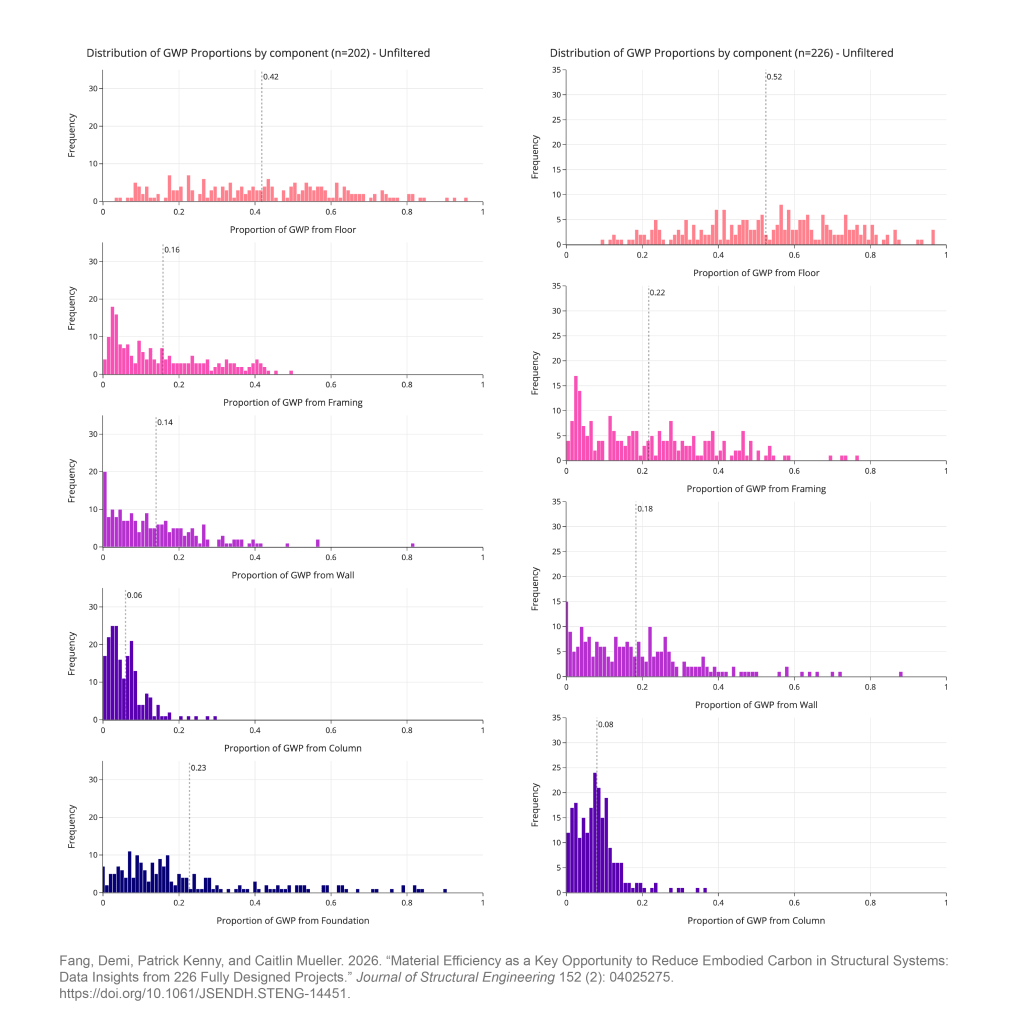
Material efficiency as a key opportunity to reduce embodied carbon in structural systems: Data insights from 226 fully designed projects
Data on embodied carbon in our sector offer unique opportunities to answer key questions about (1) the relative contributions of structural components to emissions, (2) the relationship…
-
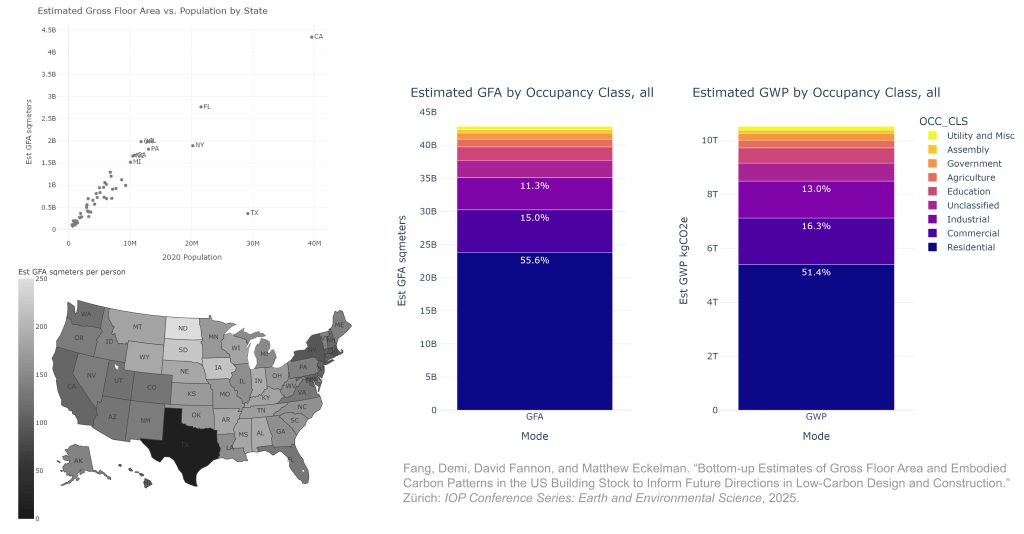
Bottom-up estimates of floor area and embodied carbon patterns in the US building stock
What is the distribution of Gross Floor Area (GFA) and embodied carbon among building types and building sizes in the United States? By count and…
-
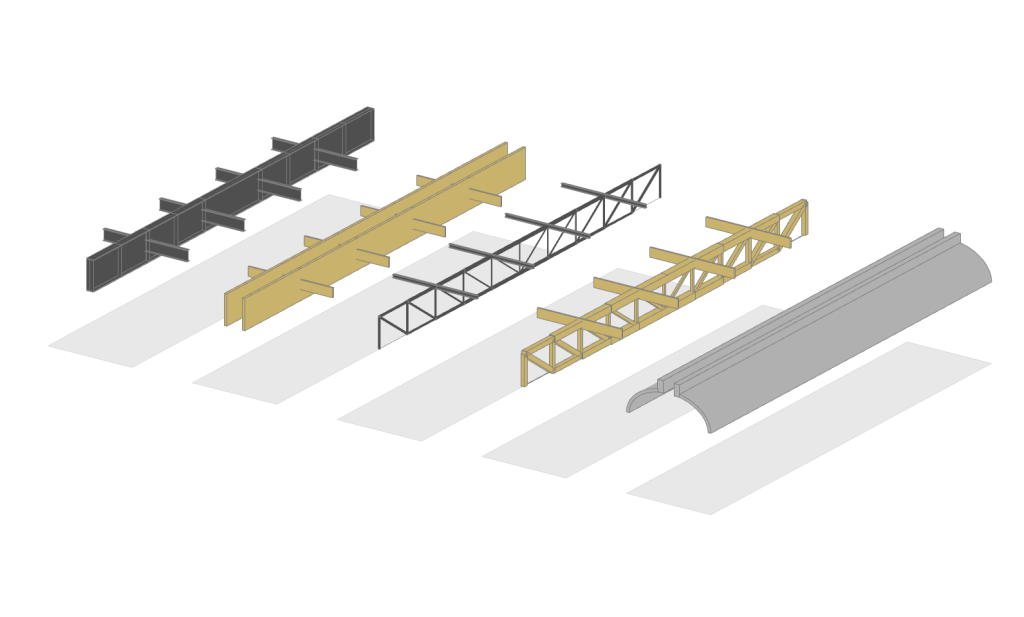
Trans-typology design space exploration: Using gradients to inform decision-making in the design of spanning structures
Does a timber beam or a steel truss result in a lighter structure? Between shortening the span and decreasing the load demand, which results in…
-
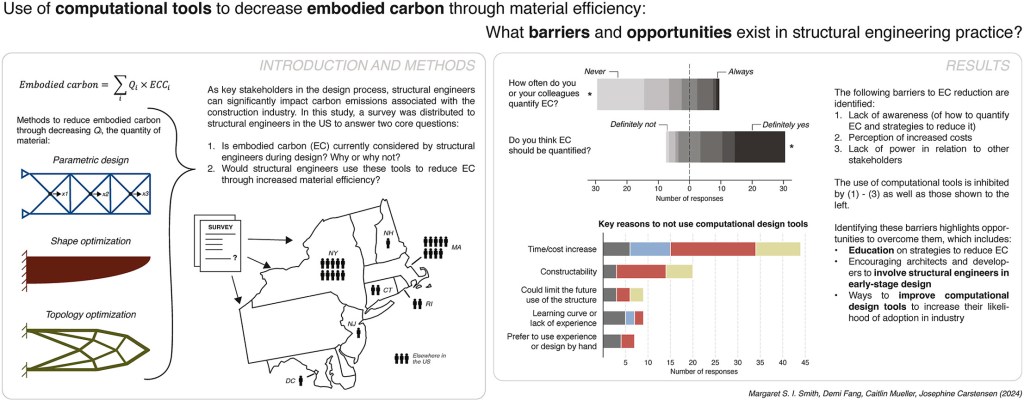
Reducing embodied carbon with material optimization in structural engineering practice: Perceived barriers and opportunities
Structural engineers play an essential role in reducing embodied carbon emissions in buildings, which contribute significantly to global carbon emissions. In this work, 39 structural engineers primarily from…
-
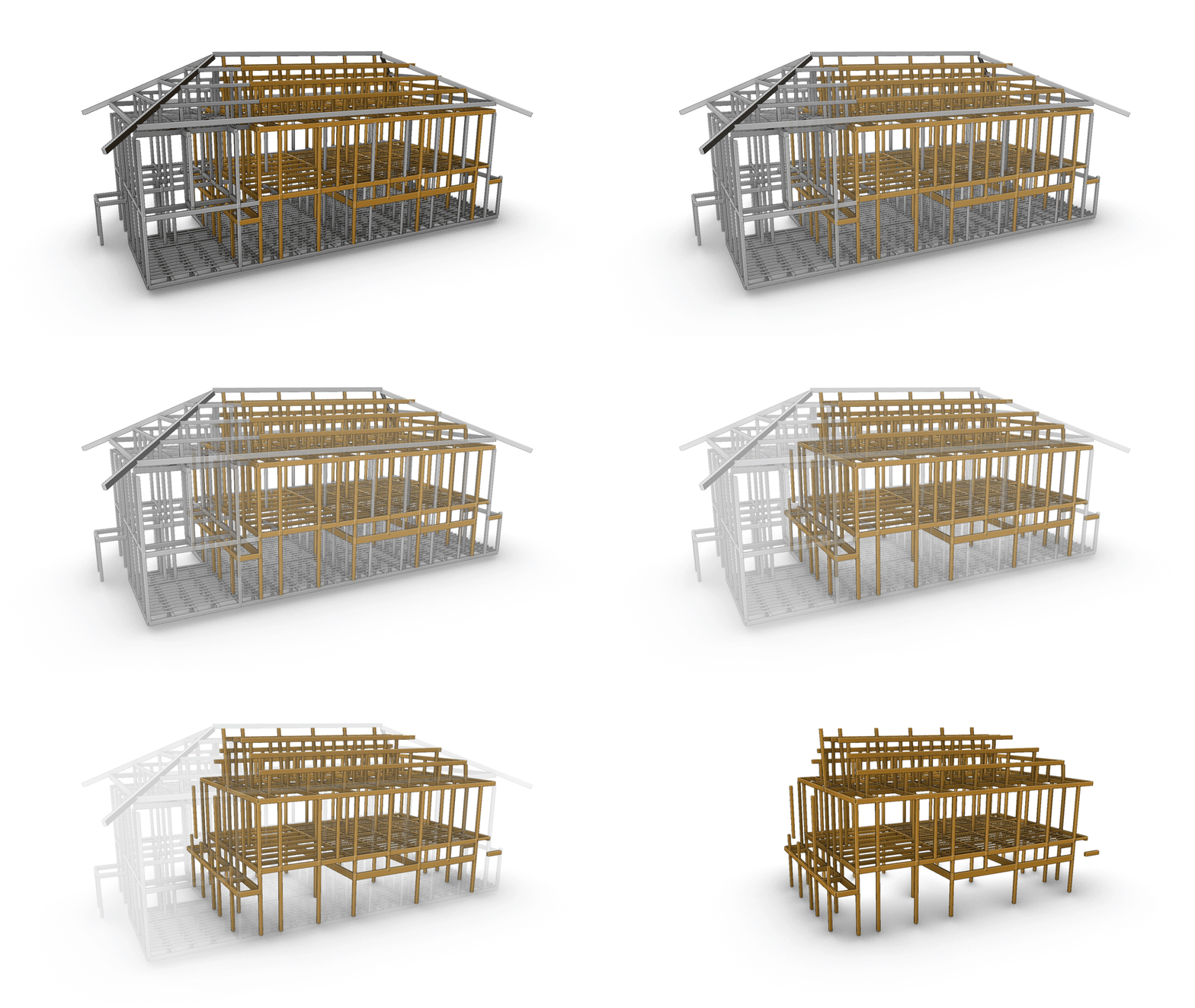
Documenting the Chair Laboratory: A case study in carpentry craftsmanship and circularity
“As consumers, we practice reuse in everyday life, often as a means of wasting less. When it comes to buildings, the environmental and economic stakes…
-

Strategies to reduce embodied carbon in early-stage structural design
While many strategies have been identified and proposed for reducing embodied carbon in early-stage structural design, they are rarely synthesized to discuss their relative effectiveness…
Theses and Dissertations
-
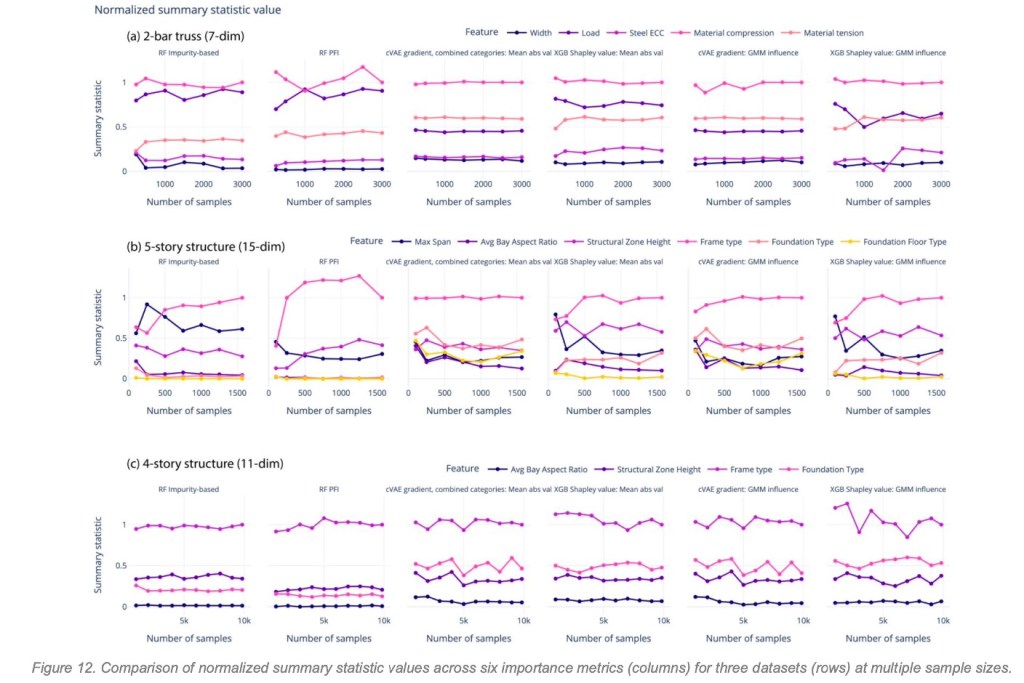
Informing decision-making in single-objective, mixed-variable design problems
Data-driven decision-making in mixed-variable design problems presents a variety of challenges and opportunities, especially in the increasingly data-rich field of emissions in architectural and structural design.…
-
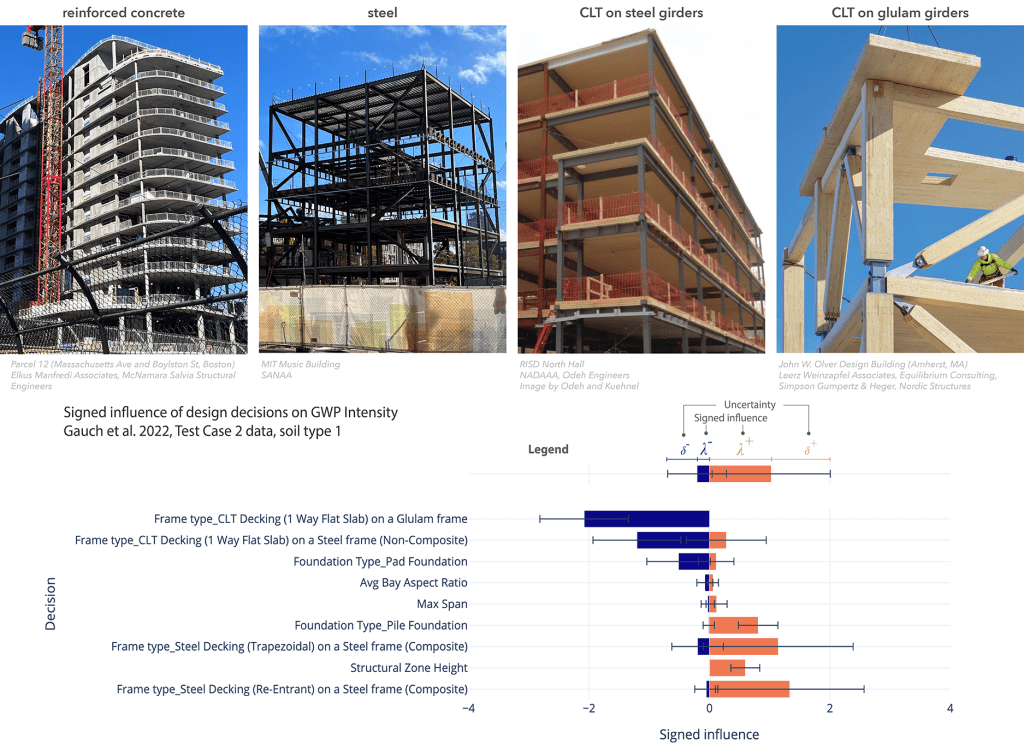
System-level design of low-carbon structures
“What is more likely to be associated with a reduction in emissions: switching from concrete to timber, or shortening the spans throughout the building?” While…
 Structural Futures Lab